Sculptures are three-dimensional artworks created by carving, modeling, casting, or assembling materials such as stone, metal, clay, wood, or glass. As one of the oldest art forms, sculptures have played a vital role in human history, culture, and artistic expression.
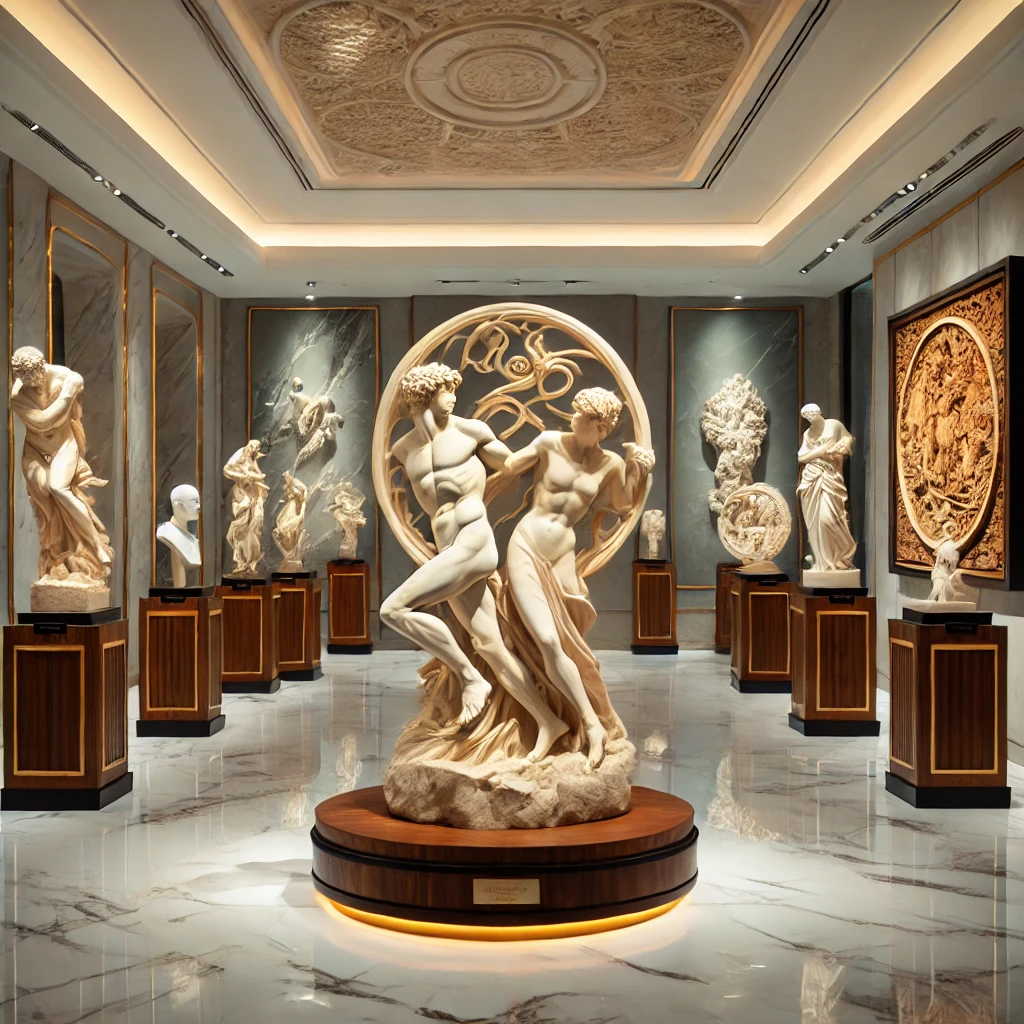
Types of Sculptures
- Carved Sculptures – Made by cutting or chiseling materials like marble, wood, or stone. Example: Michelangelo’s David.
- Cast Sculptures – Created by pouring molten metal, plaster, or resin into a mold. Example: Bronze statues.
- Modeled Sculptures – Shaped by hand using soft materials like clay or wax before being hardened.
- Assembled Sculptures – Constructed by putting together various materials, often found in modern and abstract art.
- Kinetic Sculptures – Moveable artworks powered by wind, water, or mechanical systems. Example: Alexander Calder’s mobiles.
- Relief Sculptures – Attached to a background surface, where figures are raised or recessed. Found in ancient temples and monuments.
Materials Used in Sculpting
- Stone – Marble, granite, and limestone are common for classical sculptures.
- Metal – Bronze, iron, and aluminum are used for durable, intricate designs.
- Wood – Carved for religious and traditional art.
- Clay & Plaster – Often used for initial models before final casting.
- Glass & Modern Materials – Contemporary artists use glass, plastics, and even recycled materials.
Importance of Sculptures
- Cultural & Historical Significance – Sculptures have preserved history, from ancient Egyptian statues to modern memorials.
- Artistic Expression – Artists use sculptures to communicate ideas, emotions, and social messages.
- Public & Architectural Art – Many sculptures are placed in parks, buildings, and public spaces to beautify cities.
- Religious & Spiritual Symbols – Found in churches, temples, and sacred sites worldwide.
Famous Sculptors & Works
- Michelangelo – David, Pietà.
- Auguste Rodin – The Thinker.
- Henry Moore – Modern abstract sculptures.
- Alexander Calder – Kinetic sculptures.
- Sculptures