Digital Art refers to artwork created using digital technology, such as computers, tablets, and specialized software. It blends creativity with innovation, allowing artists to explore limitless possibilities in visual expression.
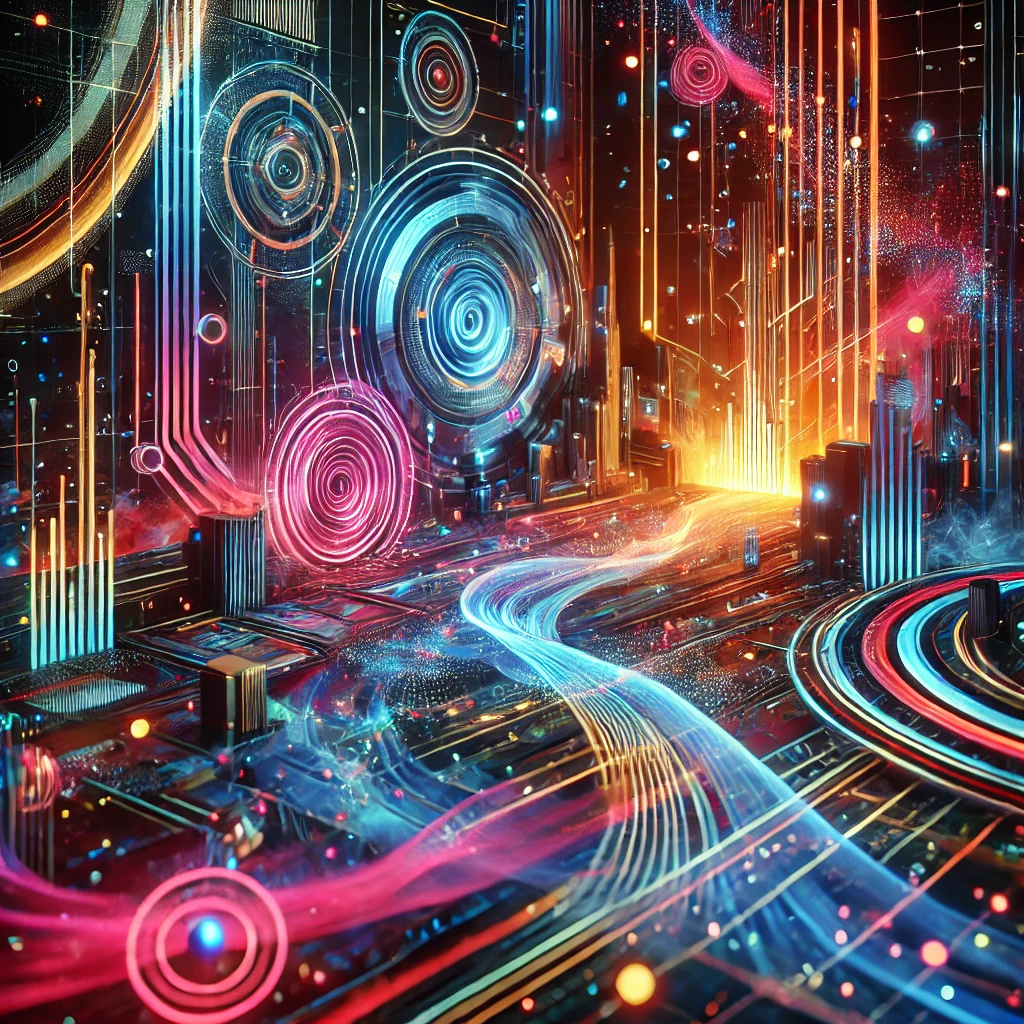
Types of Digital Art
- Digital Painting – Created using software like Adobe Photoshop, Corel Painter, or Procreate, mimicking traditional painting techniques.
- 3D Art & Sculpting – Involves creating three-dimensional models and environments using tools like Blender, ZBrush, and Maya.
- Pixel Art – A nostalgic art form based on small, square pixels, commonly used in retro-style video games.
- Vector Art – Made using mathematical paths in software like Adobe Illustrator, allowing for infinite scalability.
- Fractal Art – Generated using mathematical formulas and algorithms to create mesmerizing, abstract designs.
- AI-Generated Art – Created with artificial intelligence tools like DALL·E and Midjourney, blending technology and human creativity.
- NFT Art – Digital artwork secured on the blockchain, allowing artists to sell and authenticate unique pieces as NFTs (Non-Fungible Tokens).
Tools & Software for Digital Art
- Adobe Photoshop & Illustrator – Industry-standard for painting, illustration, and design.
- Procreate – Popular among digital painters for its user-friendly interface and powerful brushes.
- Blender & ZBrush – Used for 3D modeling, animation, and digital sculpting.
- Krita & Clip Studio Paint – Free or affordable alternatives for digital painting and comics.
Advantages of Digital Art
- Endless Creative Possibilities – Artists can experiment with colors, layers, and effects without limitations.
- Easy Corrections & Flexibility – Mistakes can be undone, and artworks can be modified without starting over.
- Wider Reach & Accessibility – Digital art can be easily shared, sold, and displayed online.
- Cost-Effective – No need for physical materials like canvases, paints, or brushes.
Digital Art in Today’s World
- Used in gaming, animation, advertising, and web design.
- Plays a major role in NFTs and the metaverse.
- Increasingly accepted in mainstream galleries and exhibitions.
- Digital Art