Scaffolding is a temporary structure used in construction, maintenance, and repair projects to provide workers with a stable platform for working at various heights. It is essential for ensuring safety, efficiency, and accessibility on job sites, allowing laborers to perform tasks such as painting, plastering, welding, and structural installations with ease. Scaffolding systems come in different types, including tube and coupler scaffolding, modular scaffolding, system scaffolding, and mobile scaffolding, each designed for specific applications based on project requirements. Materials like steel, aluminum, and fiberglass are commonly used to manufacture scaffolding, ensuring durability, strength, and resistance to environmental conditions. Aluminum scaffolding is lightweight and rust-resistant, making it ideal for quick installations and indoor use, while fiberglass scaffolding is preferred in electrical work due to its non-conductive properties. The design and structure of scaffolding depend on factors such as load capacity, height requirements, and workspace limitations. Mobile scaffolding, equipped with wheels, allows for easy movement across different work areas, enhancing flexibility and productivity on-site. Suspended scaffolding is used for high-rise buildings, enabling workers to perform façade maintenance, glass installations, and exterior painting with precision. Cantilever scaffolding is designed for areas where ground support is not feasible, projecting outward from a building structure. Safety is a top priority in scaffolding systems, with regulations requiring proper guardrails, toe boards, and anti-slip surfaces to prevent accidents. Workers must be trained to assemble, dismantle, and use scaffolding correctly to minimize risks. International safety standards, such as those set by OSHA (Occupational Safety and Health Administration) and ISO (International Organization for Standardization), ensure that scaffolding systems meet strict guidelines to protect workers. Regular inspections and maintenance of scaffolding components, including braces, frames, and planks, are necessary to prevent structural failures. In addition to construction sites, scaffolding is widely used in shipbuilding, industrial maintenance, bridge construction, and event staging. Scaffolding suppliers in Dubai, Sharjah, and the UAE offer a wide range of options, catering to small-scale projects as well as large infrastructure developments. Renting scaffolding is a cost-effective solution for short-term projects, while purchasing scaffolding is beneficial for long-term construction needs. The demand for advanced scaffolding systems continues to grow as construction companies seek safer, more efficient, and eco-friendly solutions. Prefabricated scaffolding and automated scaffolding systems are becoming more popular, reducing assembly time and labor costs while enhancing worker safety. Smart scaffolding technologies, integrating sensors and real-time monitoring, are also being explored to improve safety compliance and prevent structural issues. With rapid urbanization and the increasing number of high-rise developments, scaffolding remains a crucial component of modern construction. Investing in high-quality scaffolding solutions not only ensures worker safety but also enhances project efficiency and structural stability. As construction standards evolve, the industry continues to innovate, introducing lightweight, modular, and AI-driven scaffolding solutions to meet future demands. Scaffolding, therefore, plays a fundamental role in shaping skylines, supporting infrastructure projects, and ensuring that construction work is carried out safely, efficiently, and successfully.
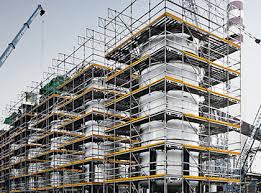
scaffolding